
Quick answer: Choose WooCommerce if your business already runs on WordPress, sells unusual products or needs full ownership and flexibility, and you have someone to maintain it. Choose Shopify if you want a managed platform with no server work and a fairly standard store. Compare the total cost over two or three years.
If you want to sell online, WooCommerce and Shopify are the two platforms most small businesses end up comparing. Both are proven, both can run a professional store, and both can be the wrong choice in the wrong situation.
I build on both when it makes sense. Here is how I help clients decide.
The core difference
WooCommerce is a free plugin that turns a WordPress site into a store. You own everything and can customise almost anything, but you are responsible for hosting, updates and security. Shopify is a hosted platform you subscribe to. It handles the technical side for you, in exchange for less flexibility and ongoing platform fees.
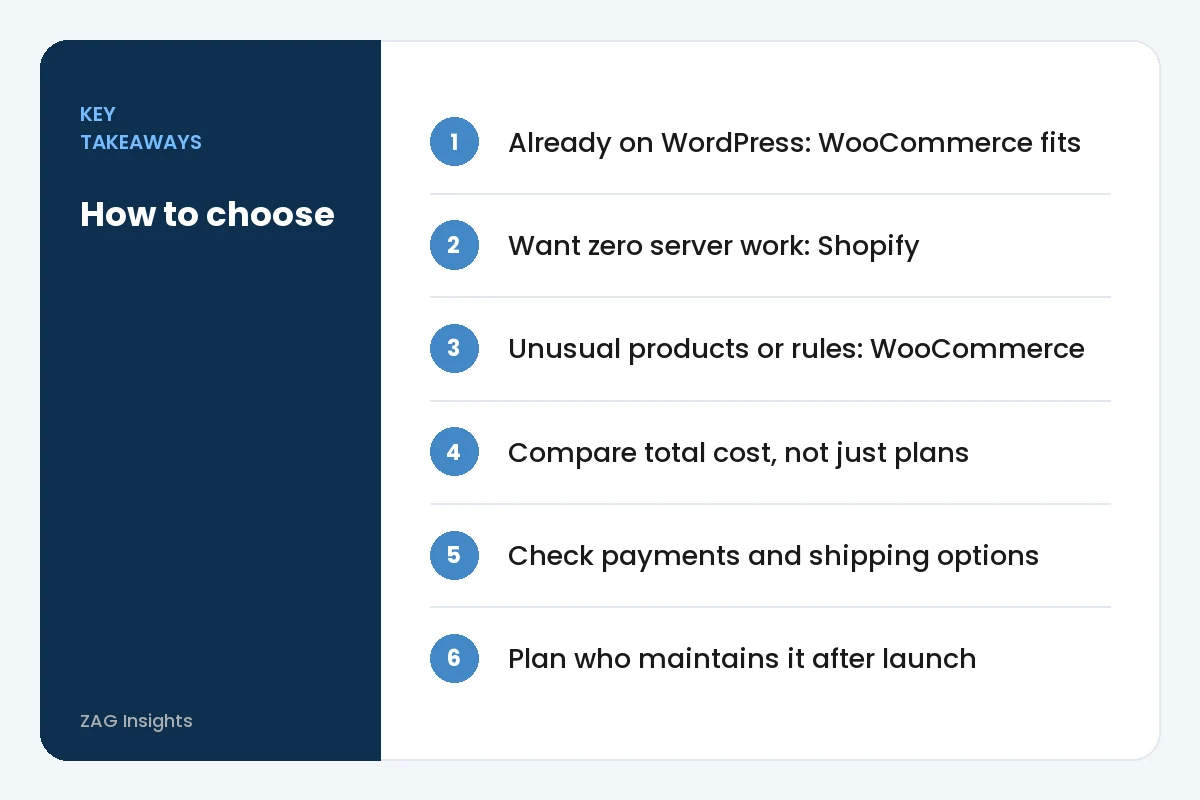
Choose WooCommerce when
- Your business already runs on WordPress and content is a big part of how customers find you.
- You sell something unusual: custom options, bookings, memberships, B2B pricing or complex rules.
- You want full ownership of your data and freedom to change hosts or developers.
- You have someone, in-house or a partner, to handle maintenance.
Choose Shopify when
- You want to focus purely on selling, with no server or plugin updates to manage.
- Your products and checkout are fairly standard.
- You expect to rely on Shopify’s built-in sales channels and app ecosystem.
- You are comfortable with a monthly subscription that grows with your plan and apps.
Compare the total cost
WooCommerce is free, but hosting, premium extensions and maintenance are not. Shopify has a clear monthly plan, but paid apps, themes and transaction or payment fees add up. Estimate the total over two or three years for the store you actually need, not the cheapest plan on the pricing page.
Payments, shipping and taxes
Check that your preferred payment providers, shipping carriers and tax rules are supported in your country before you choose. This matters especially outside the US and Europe, where options can differ a lot between platforms.
SEO and content
Both platforms can rank well. WordPress gives you more control over content, structure and structured data, which helps if blog posts, guides and category pages are a big part of your marketing. Whichever you choose, follow Google’s guidance for e-commerce sites: clear product data, fast pages and unique product descriptions.
Think about year two
The platform decision is really a decision about who will run the store after launch. A WooCommerce store needs regular updates and checks, much like any WordPress site. A Shopify store needs less technical care but more attention to app costs. Choose the one your team can sustain.
Sources and further reading
Planning an online store?
I build WooCommerce stores and can help you choose the right platform for your products, budget and team before you commit.